
Airline lavatories are one of the most constrained design problems in the world: extremely limited space (less than 1.5m²), high traffic (hundreds of uses per flight), strict weight regulations, and the need to serve passengers of all ages, abilities, and sizes.
Iberia and UDIT challenged the team to rethink the A350 lavatory without compromising the spatial envelope — meaning all improvements had to be achieved through smarter use of the existing footprint and integration of technology into the existing structure.
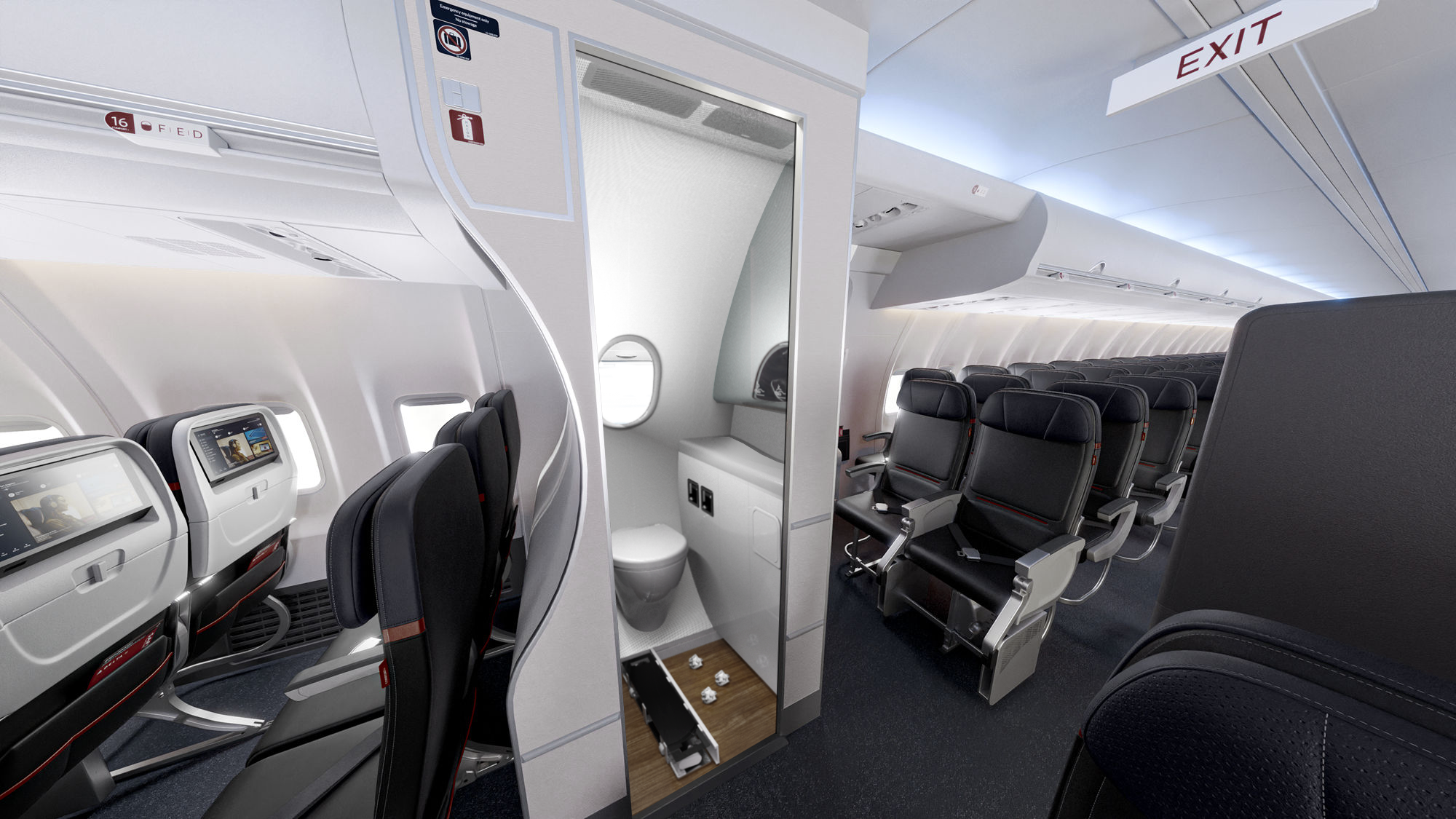
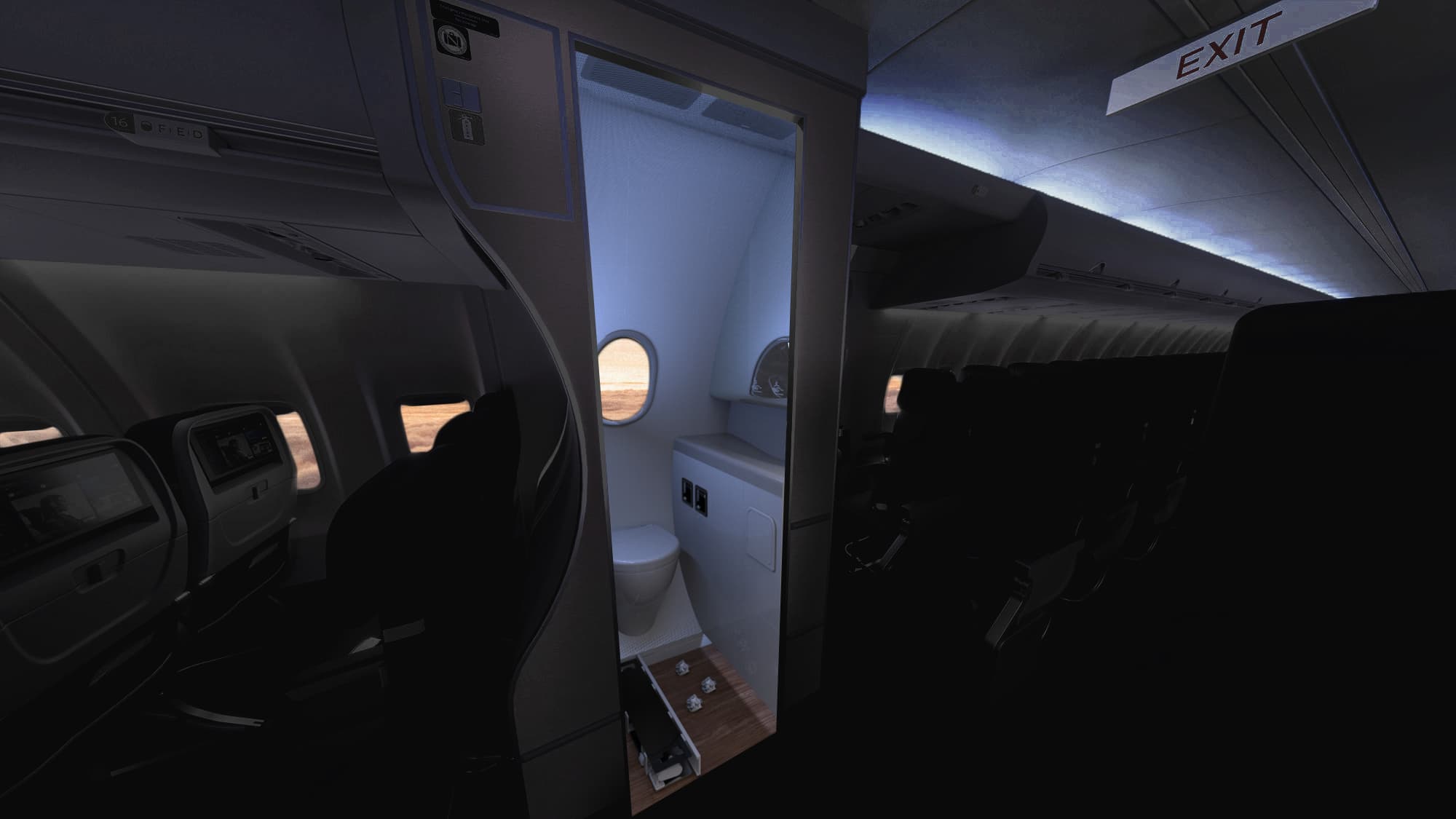
The main design directions identified through research were: touchless interaction to reduce cross-contamination, autonomous sanitisation between passenger uses, improved spatial flow for wheelchair users, and better lighting and visual communication to reduce anxiety in the confined space.
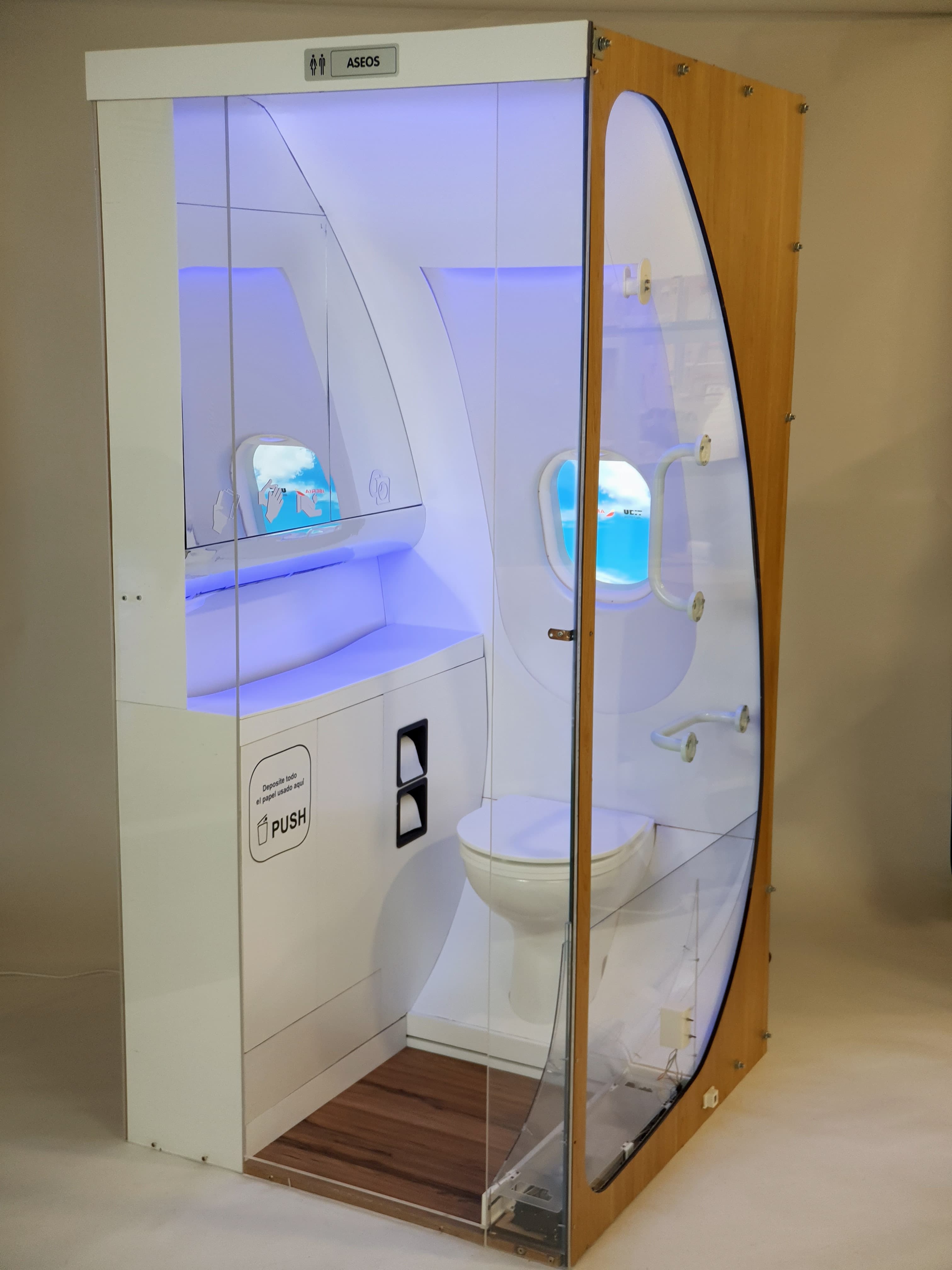
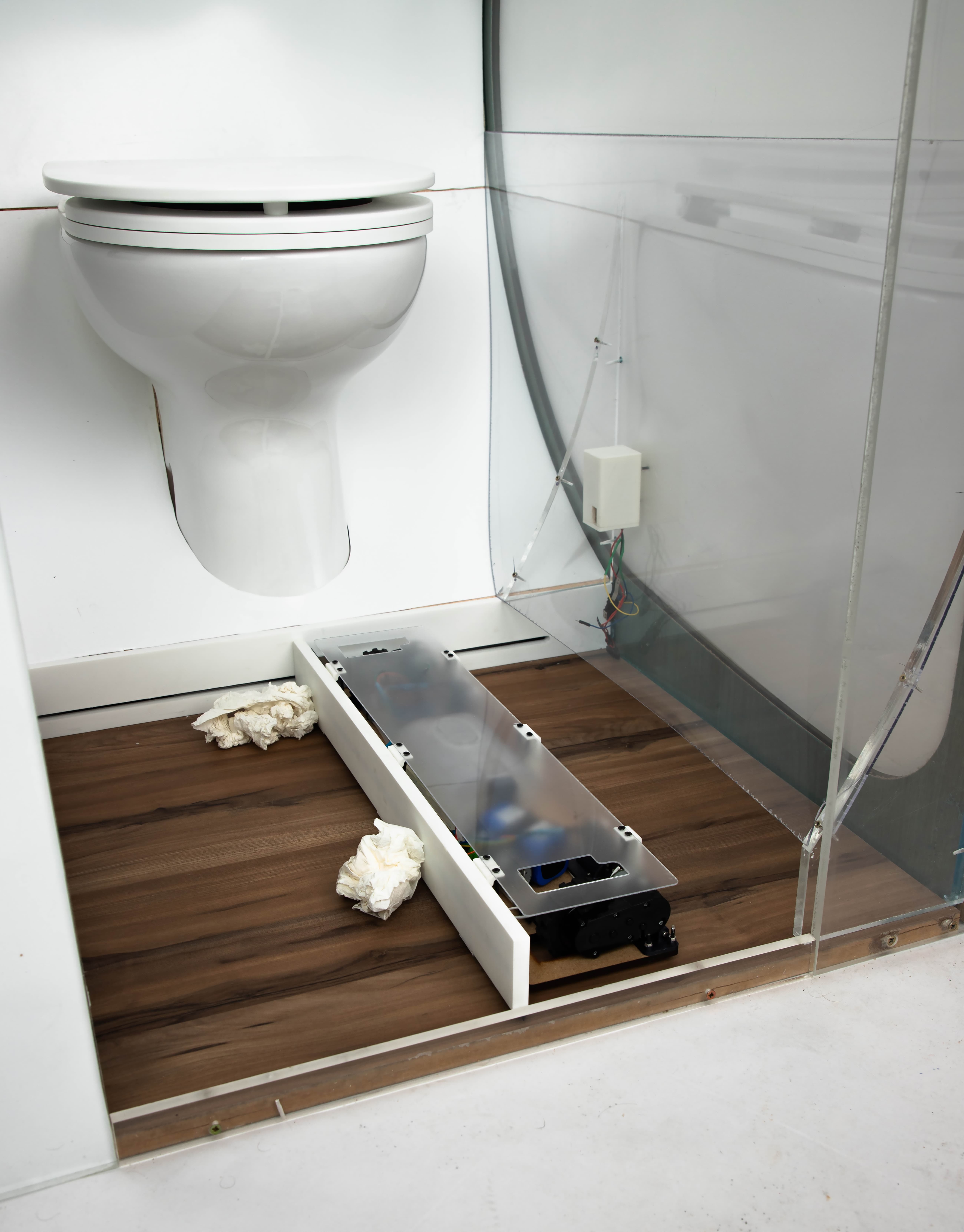
The project involved a functional Arduino-based prototype of the sanitising system, built and tested in the UDIT FabLAB using CNC milling, manual sanding, and final assembly — demonstrating the technical feasibility of the proposed solution.
.jpg)