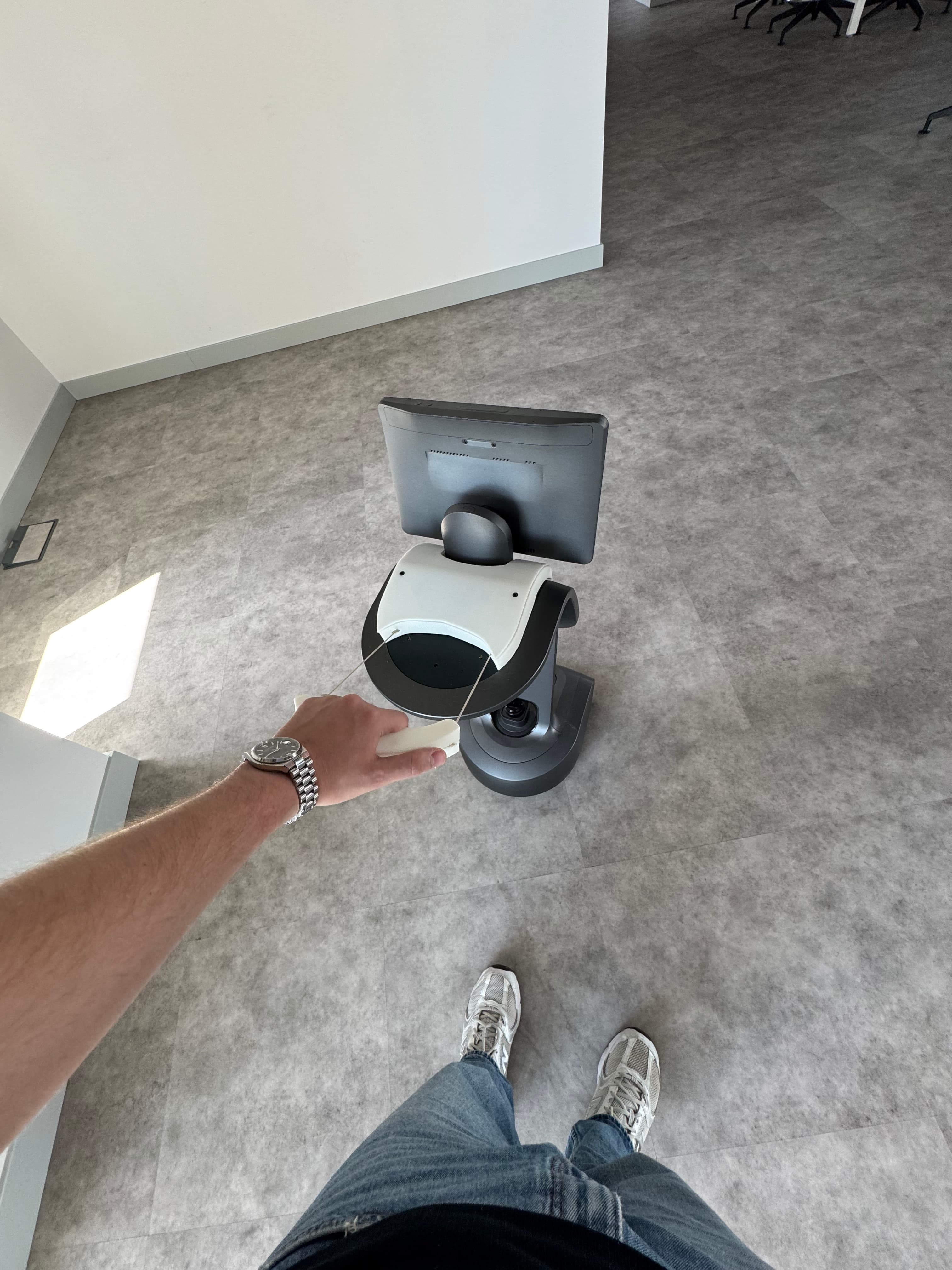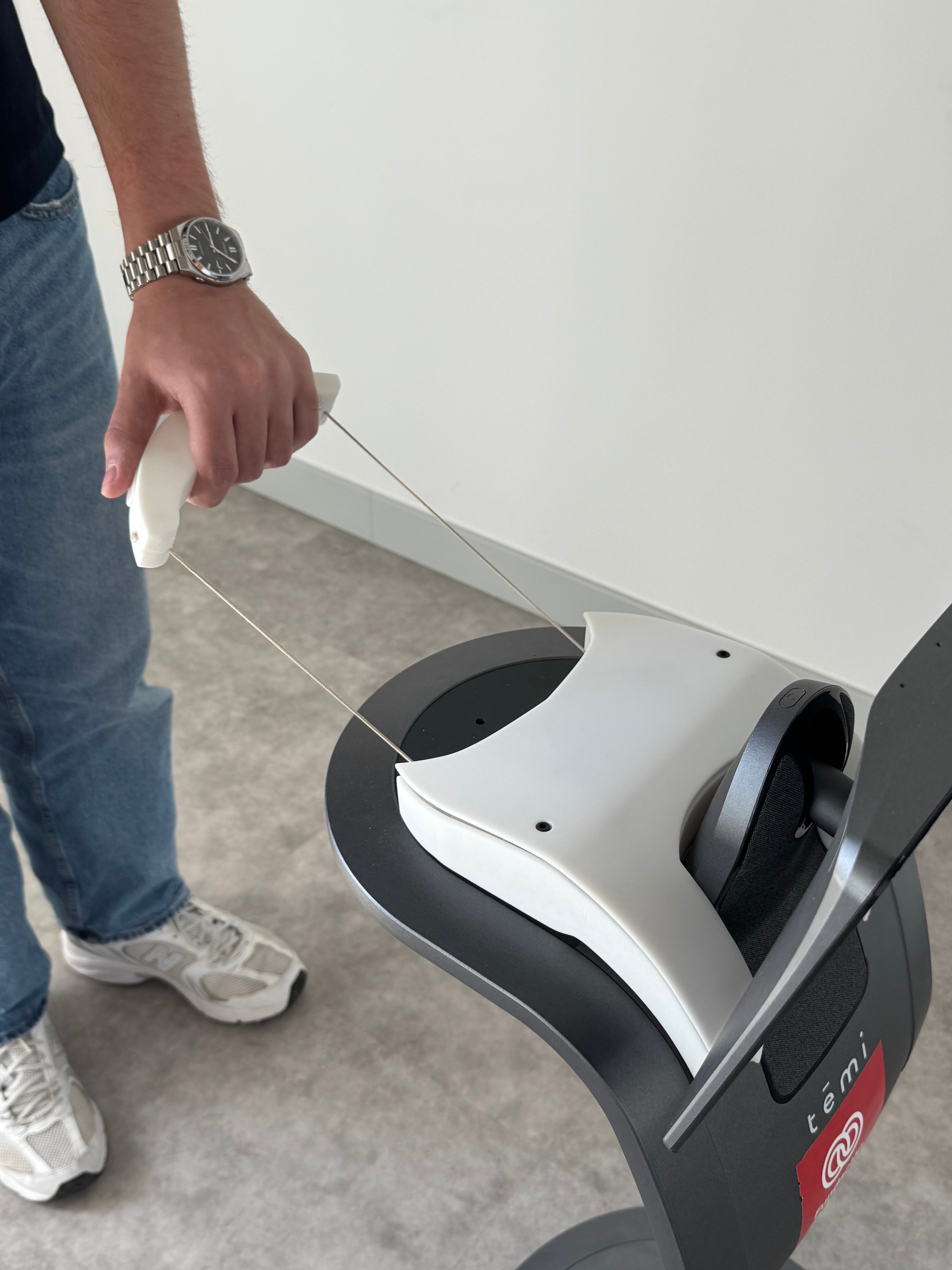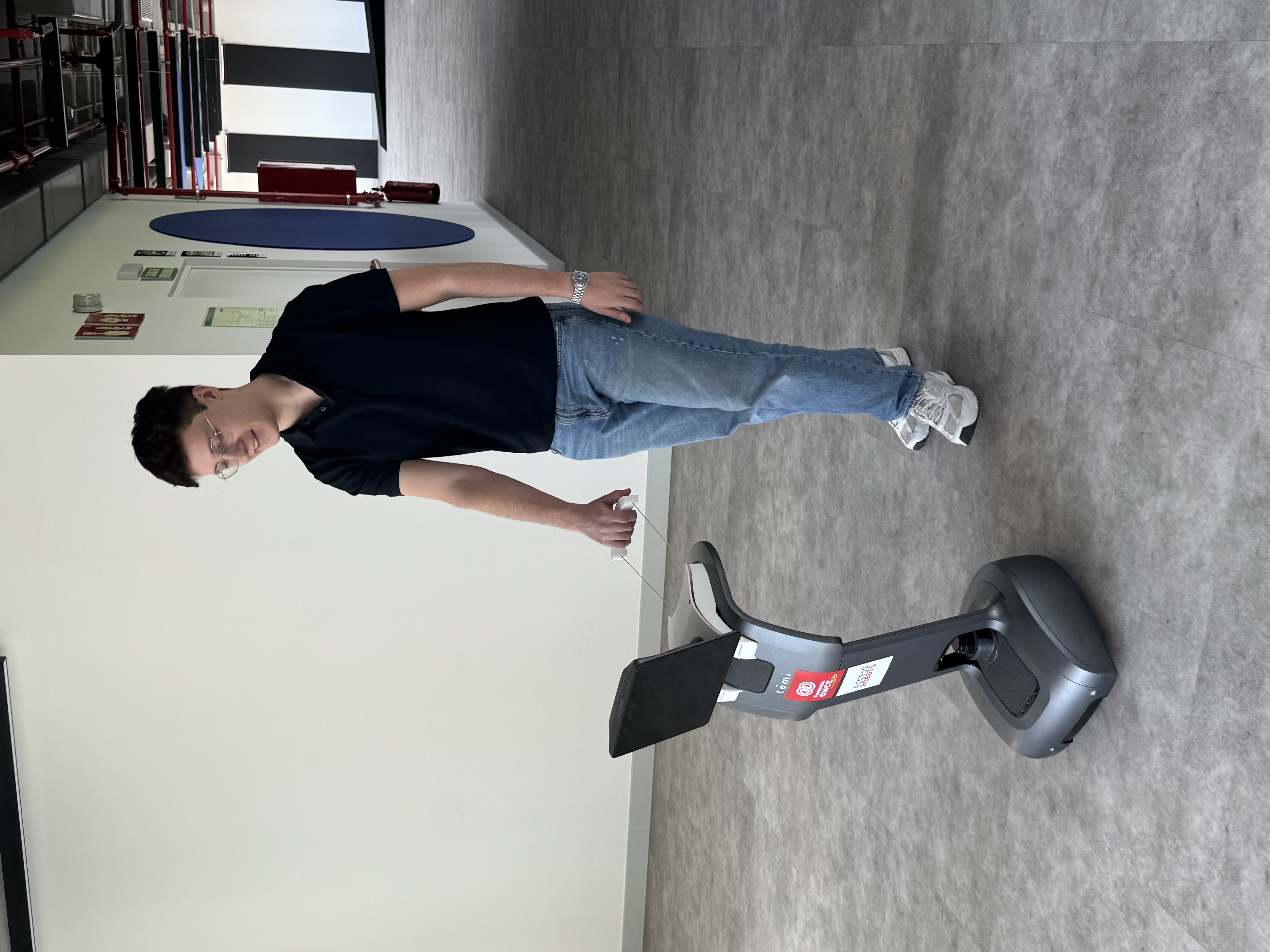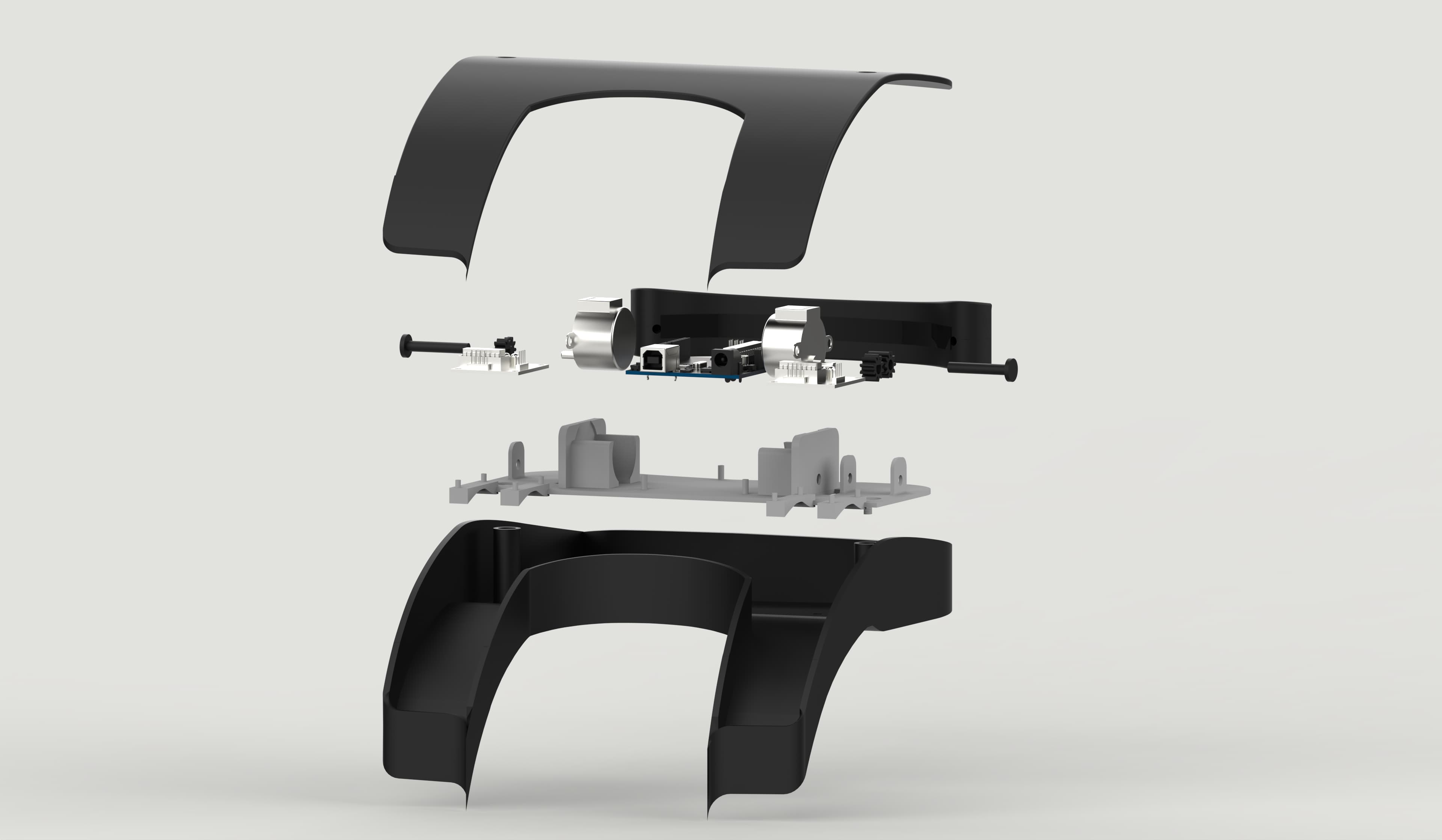

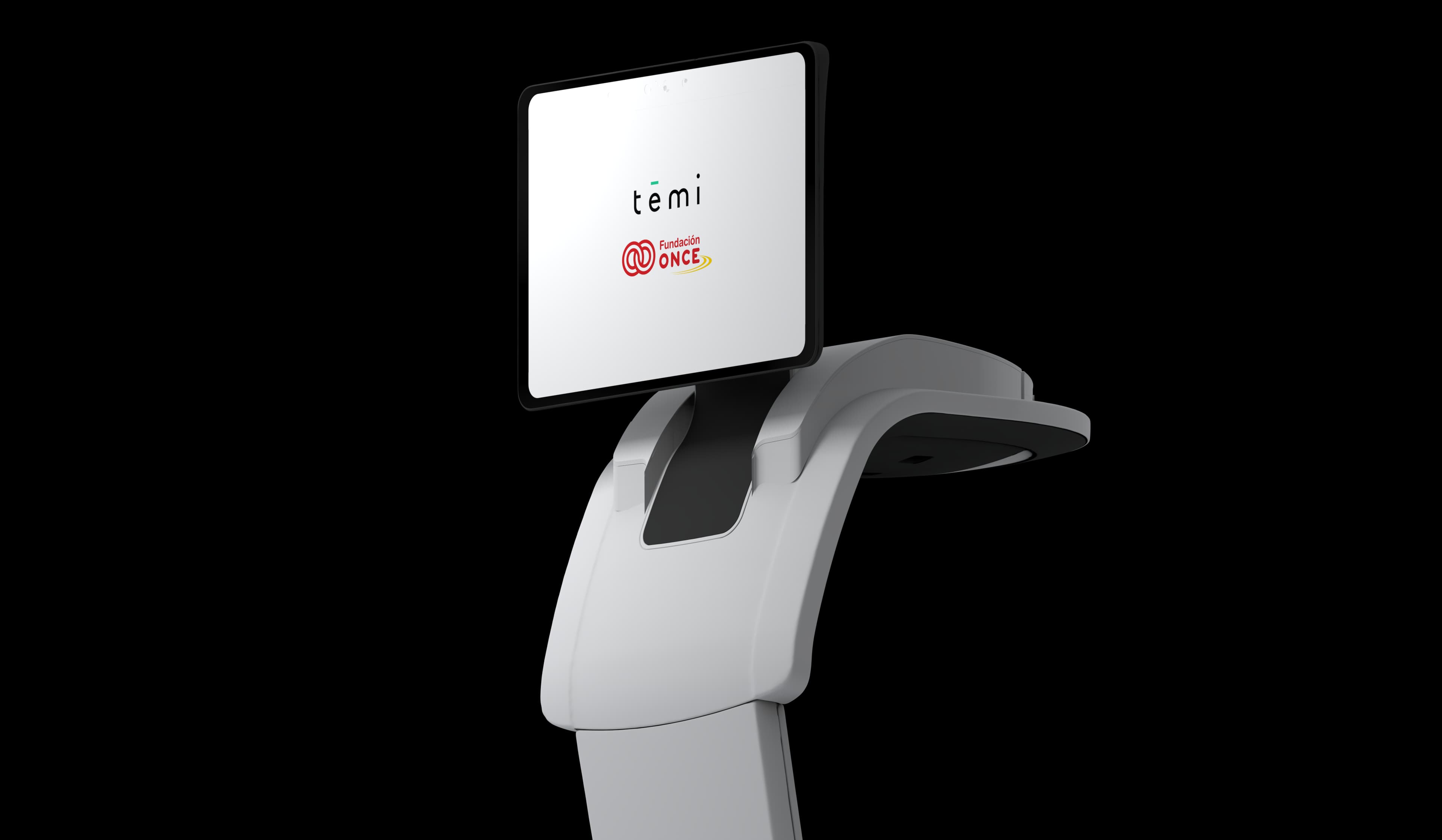
Temi is a commercially available service robot used in healthcare, hospitality, and accessibility contexts. Its existing capabilities include navigation, voice interaction, and video communication — but it lacks the ability to physically interact with objects, severely limiting its usefulness for people with mobility impairments.
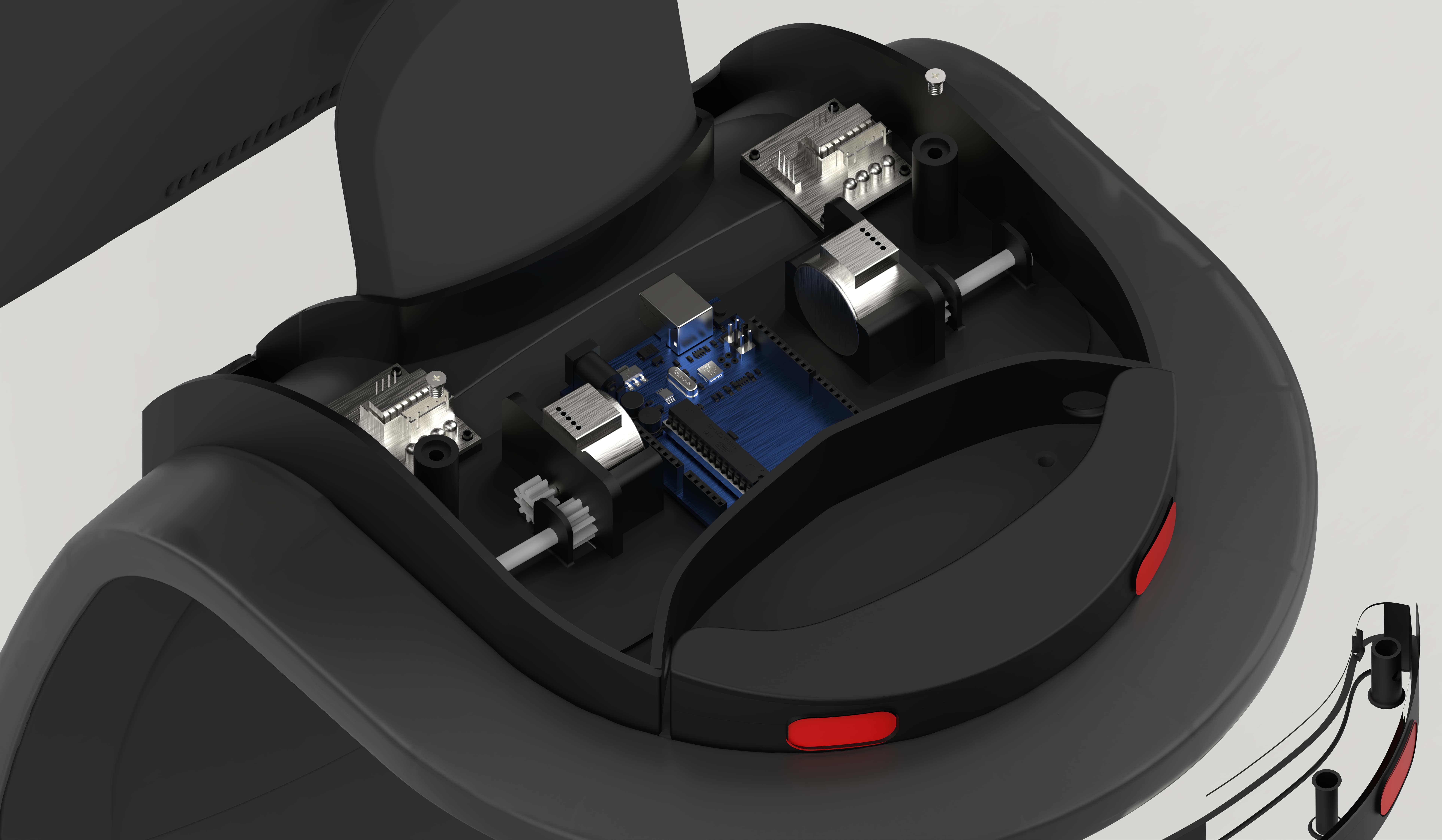
Fundación ONCE identified this gap and partnered with UDIT to challenge students to design a gripping attachment that could extend Temi's capabilities without modifying its core structure. The attachment had to be non-invasive, reversible, and manufacturable with accessible technology.
The user research phase involved direct contact with people with different mobility conditions — from reduced hand dexterity to full wheelchair users. Their feedback shaped every design decision: handle size, grip force range, interaction interface, and the scenarios the system needed to support (picking up fallen objects, delivering medication, carrying light bags).
This human-centered approach was not just a methodological choice — it was the entire foundation of EX-TEM. The design only succeeded when tested by the people it was meant to serve.